

Investing in Graded Cards: Value, Risk and a Real Method
"Which graded cards are worth investing in?" It is one of the questions we get most often, and the honest answer is not a list of names. A graded card does not gain value because it sits in a slab: it gains value — when it does — for reasons you can read before you spend. This guide sets out those reasons, the costs almost nobody counts, and the risks worth naming out loud. No forecasts, because anyone promising you returns on a collectible is selling you something.
Key Takeaways
Question |
Quick Answer |
|---|---|
Does grading increase a card's value? |
It does not create value — it makes value measurable and tradeable. The slab certifies authenticity and condition, so the card can be bought at a distance without the buyer having to trust anyone. |
What matters more, the grade or the card? |
The card. A high grade on a common card is still a common card; a mid grade on a genuinely scarce print can be worth many times more. |
Which cost is always forgotten? |
The cost of getting out. Between marketplace fees, insured shipping and the time it takes to find the right buyer, the price you see is not the price you bank. |
Where do you check whether a price makes sense? |
In the grader's population report, to see how scarce that grade really is — and in completed sales, never in open listings. |
Is it an investment? |
It is a collectible: illiquid, volatile and with no guarantee of resale. Treating it as a financial asset means ignoring three of those four words. |
1. What Grading Actually Does
A graded card is a card examined by an independent company that certifies its authenticity and condition with a numerical grade, then seals it in a serialised slab. The point is not cosmetic: it turns a subjective judgement into a data point. Two people can argue for an hour over whether a Base Set holo is "near mint" or "excellent"; nobody argues about what a PSA 8 is.
That is why graded cards sell across borders without the buyer needing to trust the seller: they are buying a verifiable number, not a description. Two consequences follow — a wider market and comparable prices — plus a third that is less obvious: grading adds nothing to a card that has no value to begin with. Certifying a common in perfect condition costs more than the common is worth, before and after.
2. The Five Factors That Set the Value
The price of a slab is the product of five things, and none of them is the grade on its own.
One — demand for the subject. Charizard, Lugia, Mewtwo, Luffy, Blue-Eyes White Dragon: iconic characters have a buyer base that does not depend on the competitive meta and does not run out. It is the most stable of the five.
Two — scarcity of the print. How many copies of that specific version exist: first edition, missing rarity symbol, tournament promo, serial-numbered, misprint. This is the factor that moves prices hardest, because it is the only one that can never change.
Three — scarcity of the grade. Not how many copies exist, but how many exist in that grade. On some vintage cards the step from 9 to 10 is worth more than the rest of the card, because the 10 is a tiny fraction of all graded copies. You read it in the population report, and we have given that its own guide.
Four — language and edition. The same card in English, Italian and Japanese is three different markets, with different audiences and prices. Japanese (JP) print runs often have higher production quality, and therefore a different distribution of grades.
Five — the health of the game. An active TCG with tournaments and new players supports its own collectible market. A game losing its player base eventually loses the vintage too — with a lag of years, but it loses it.
3. The Grade Isn't Everything: When a PSA 6 Beats a PSA 10
This is the classic beginner's mistake: chasing the highest number. But the grade measures the condition of that copy, not how rare that copy is.
Two cards in our own catalogue make the point better than any theory. On one side, a Japanese Base Set Charizard with no rarity symbol in PSA 6: a middling grade on one of the most sought-after prints in the Pokémon TCG. On the other, a Charizard ex Game Art JP in PSA 10, a perfect grade on a modern card. Same character, opposite grades, and a value gap the number on the slab would never explain.
The same logic applies to Gold Stars, among the lowest print runs of the EX era: a Rayquaza Gold Star in BGS 5.5 is still a Gold Star, with the buyer base that print carries with it. The working rule is simple: pick the card first, argue about the grade second. Never the other way round.
Did You Know?
The graded market has a phenomenon called grade compression: when a card is graded in large volumes, the top grade becomes less scarce and the price premium it used to command shrinks. It is why a freshly released card graded en masse rarely keeps, over time, the 9-to-10 spread it shows in its first few months.
4. The Costs Nobody Counts
Anyone looking only at purchase price and sale price is ignoring half the ledger. A slab has four real costs.
The cost of grading, if you start from a raw card: the grader's fee, international shipping, insurance and return. We break it down line by line in our guide to grading cards from Europe. The cost of keeping it: a scratched or yellowed slab reduces value even with the card intact inside, so it needs protecting — hence slab bumpers and rigid cases.
The cost of getting out, the most underestimated of all: marketplace fees, insured shipping, any applicable tax, and above all time. A high-end slab can take months to meet the right buyer, and whoever is in a hurry sells below market. The opportunity cost: capital locked in a card is not available for anything else, and unlike a financial instrument it produces nothing while it waits.
5. The Risks, Stated Plainly
There are five, and they all belong on the list — not just the convenient ones.
Volatility. The TCG market has had phases of very fast growth and equally fast corrections. Anyone who bought into the 2021 peaks saw how quickly it can go the other way.
Reprints and re-releases. A publisher can reprint a card or reissue an artwork, and on some modern cards that has compressed prices permanently. Vintage is immune; modern is not.
Illiquidity. There is no bid-ask book: there is someone who wants that card, that day, at that price. The higher the tier, the fewer those people are.
Concentration. Putting everything into one card, one game or one grade is the fastest way to turn a hobby into a problem.
Slab authenticity. Counterfeit slabs exist, and so do slabs that have been cracked and resealed. Check the certificate number in the grader's own database, and look at the label photos before buying — not after.
6. The Five-Step Method
This is the sequence we recommend before any purchase, and it holds for a €50 slab as much as a €5,000 one.
One — identify the card exactly. Not "a Charizard": set, number, edition, language, any variant. Two prints that look identical can have incomparable values.
Two — verify the certificate. Take the number from the label and check it in the grader's public database. If the seller will not show a legible label, you already have your answer.
Three — read the population report. How many copies have been graded, and how many reached that grade. This is the figure that separates real scarcity from perceived scarcity.
Four — compare completed sales, not open listings. An asking price is not a market price: anyone can ask anything.
Five — total the cost: purchase plus keeping plus exit. If the maths only works assuming the card goes up, that is not a valuation — it is a bet.
If you want to know what you already own before buying more, a professional collection appraisal is the place to start; and to choose which company should grade a raw card, there is our PSA vs BGS vs GRAAD comparison.
7. Four Things Not to Do
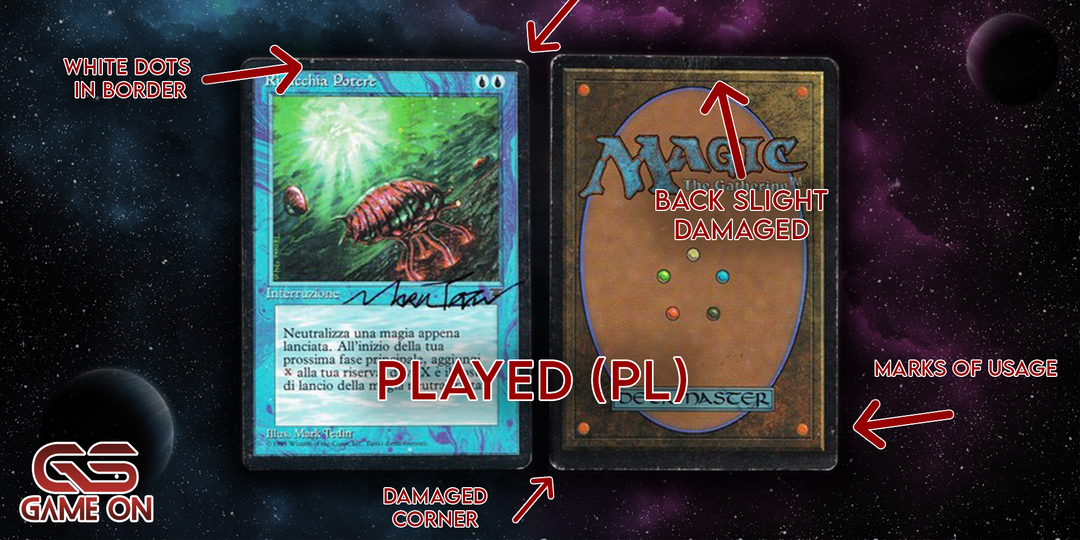
Don't buy a grade without looking at the card underneath it. Don't chase the hype on a freshly released card: the first few months are the least reliable prices in a print's entire life. Don't buy slabs without photos of the label and the back. Don't lock up capital you need: a collectible is the last thing you can liquidate in a hurry.
In our selection of graded cards certified by PSA, BGS and GRAAD every listing shows the actual item with a legible label and certificate — front and back — precisely because the buyer should be able to do that check. The two largest sections are graded Pokémon cards and graded One Piece cards, shipped across Europe.
Conclusion
There is no list of "graded cards to invest in" that stays valid for more than a few months, and anyone selling you one is selling certainty the market does not have. What does exist is a method: understand what makes value — subject, scarcity of the print, scarcity of the grade, language, health of the game — count every cost, and do not look away from the risks.
Apply that method and you buy better, whatever your budget. Buy high numbers and hope they rise, and sooner or later the bill arrives. The next two articles go deeper into the tools this method needs: how to read a population report, and what collectors actually look for game by game.
Note: collectible cards are not a regulated financial instrument. Market values are volatile, transaction costs are high, and there is no guarantee of resale or return. This article is for information only and does not constitute financial or investment advice.


Leave a comment