

Luffy Signed and One Piece Autographed Cards: The Complete Guide
There's a category of One Piece cards you can't pull from any pack: the ones carrying a real signature. An autograph from the historic voice actor, the mark of a special guest at a convention, even — for a lucky few — Eiichiro Oda's own stroke. It's the emotional peak of One Piece collecting, and also its most slippery ground: because a signature, by itself, is worth nothing — until someone certifies it's real. In this guide: who really signs One Piece cards, how authentication works, what Dual Grading is and how to move like a collector, not a target.
Key Takeaways
Question |
Quick Answer |
|---|---|
Who signs One Piece cards? |
Mostly the anime's historic voice actors at Japanese events, convention guests and — in very rare cases — Eiichiro Oda himself. |
How much is a signed card worth? |
It depends on who signed, on which card and — above all — on authentication: an uncertified signature is worth what the underlying card is worth, not a euro more. |
How is an autograph certified? |
With PSA Dual Grading: the card's grade and the signature's authentication in a single slab — the standard the market demands on signed cards. |
Why is "Luffy signed" the queen search? |
Because it unites the game's most collected character with the franchise's most recognizable signature: it's the signed card par excellence. |
Where to buy safely? |
Only already-authenticated slabs, from verifiable sellers: our selection lives among the graded One Piece cards. |
1. Who Really Signs One Piece Cards
The One Piece signed world has three circles. The first is the voice actors: the anime's historic voices — starting with Luffy's, the same since 1999 — sign at official Japanese events and sessions, and their signatures are the franchise's most recognizable and documented. The second is events and conventions: guests, illustrators and celebratory occasions producing signed pieces in verifiable contexts. The third is the tightest circle: Eiichiro Oda — cards signed by the creator are museum pieces, extremely rare and almost always tied to official Japanese events.
Worth saying upfront: the tighter the circle, the higher the value — and the more profitable the counterfeit. That's why everything in this world revolves around one word: authentication.
2. A Signature Without Authentication Is Just Ink
The rule we repeat to every customer: in the market's eyes, an unauthenticated autograph doesn't exist. Not because it's necessarily fake — but because no serious buyer can verify it, and what can't be verified doesn't get paid for. A card with an uncertified signature is worth the same card clean; sometimes less, because ink is a surface alteration.
Authentication flips the equation: the verified signature turns the card into a unique object with a certified story — and that's where value multiplies. It's the same trust logic governing the whole world of graded One Piece cards, squared: here you're not just certifying condition, but the signing event itself.
3. Dual Grading: How a Signed Card Gets Certified
The sector standard is PSA Dual Grading: a single process that grades the card and authenticates the signature, sealing both in the same slab with a double assessment on the label. It's the format the international market demands on valuable signed cards — and the reason searches like "luffy signed PSA 10" grow with the game.
Dual is a dedicated option of our grading service: you request it from the online form with a real-time quote, and the full path — criteria, timelines, process — is in the grading guide, with the companies compared in our PSA vs BGS vs GRAAD guide.
Did You Know?
Luffy's Japanese voice has been the same since 1999: Mayumi Tanaka. Her signatures at official events are among the most recognizable in all of One Piece collecting — and the quintessential "Luffy signed" is almost always born from her pen.
4. What Makes a Signed Card's Price
Four variables, in order. Who signed: the three-circle hierarchy — historic voice actor, event guest, mangaka — is the first half of the price. On which card: a signature on a rare promo or a chase is worth more than the same signature on a common — the canvas counts. The context: signatures obtained at documented events, with photos or witnesses, are worth more than those without a story. Condition: the card's grade still matters — a signed card in rough shape remains a compromise.
If the character is Luffy, there's one more map to know: his versions and treatments, charted in our Luffy cards guide — because a signed card is always valued in two steps: first the card, then the signature.
5. Buying Signed Cards Safely
The signed market is collecting's most exposed: a signature is easier to imitate than a holographic treatment. The rules: buy only pieces already authenticated in a slab (Dual or dedicated authentication), verify the certification number in the company's database, demand documented provenance for event pieces. The charm of the "uncertified signed at a bargain price" is exactly the trap it looks like.
In our selection, signed cards pass the same filter as the rest of the catalog — verifiable authentication, declared provenance — and live among the graded One Piece cards, with the most particular pieces shown in our Tuesday and Thursday live streams.
6. Own a Signed Card? The Path to Certify It
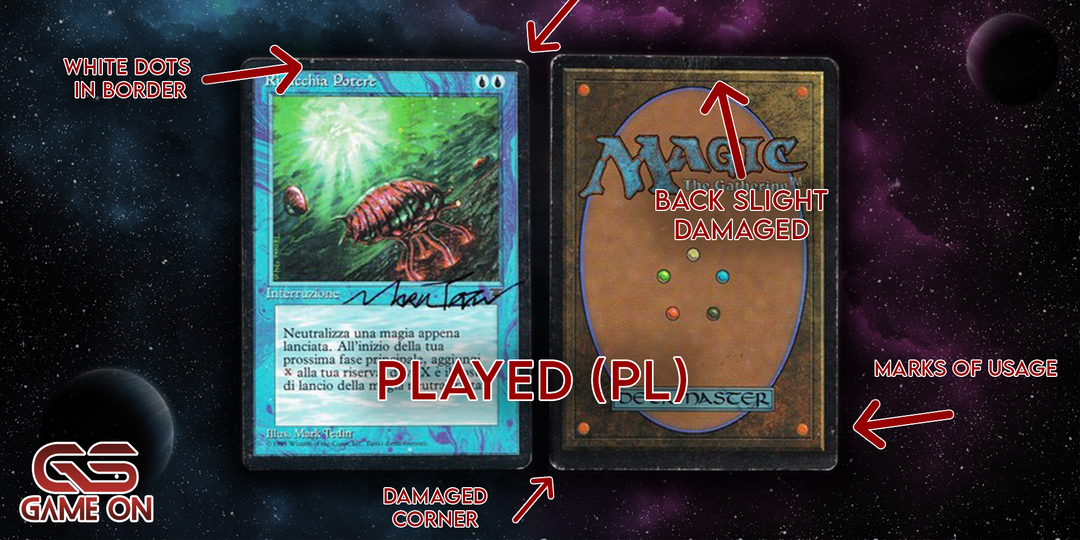
If you own an autograph obtained in person — a convention, an event, a lucky encounter — the path is linear: document everything you can (photos of the moment, tickets, context), protect the card immediately and certify with Dual Grading before any sale considerations. The difference between "a card with a signature" and "a certified signed card" is exactly the value you think you're holding.
Our service manages the whole process from Italy — and if the piece is important, the professional valuation is the right starting point to decide the path together.
7. Signed Cards in the One Piece Collecting Picture
Signed cards are where One Piece collecting touches memorabilia: no longer just the card, but the moment a real person touched it. In a mature collector's portfolio they live alongside the categories we've mapped elsewhere — the promos, sharing the event-print-run logic, and the manga rares, sharing the direct bond with the work.
The method advice: in signed cards, buy the story you can verify. An average piece with solid authentication always beats a stellar piece with a "trust me" signature.
Conclusion
Autographed One Piece cards are collecting's emotional peak — and its maturity test: here the winner is whoever demands authentication, documents provenance and treats every uncertified signature for what it is. You now have the map: the three circles of who signs, Dual Grading as the standard, the four price variables and the buying checks.
At GS Gameon we treat signed cards as graded-card specialists: verifiable authentications, declared provenances and Dual Grading managed from Italy for the signatures you deserve to certify. If a "Luffy signed" is on your radar — or in your collection — you know where to start.
Note: this article is informational. Autographed card values depend on verified authenticity, subject, canvas, condition and the market; past performance does not guarantee future results.


Leave a comment