

Graded Cards and Card Restoration: The Complete Guide to Maximizing the Value of Your Cards
In 2025, around 26.8 million cards were graded across the main companies, of which 16.8 million were TCG and non-sport — a sign of how decisive grading has become for the value of a collection.
Key Takeaways
|
Key question |
Quick answer |
|---|---|
|
Why is it worth grading your cards? |
Grading certifies authenticity and condition, and in roughly 9 cases out of 10 a PSA 10 card achieves a higher price than 9–10 grades from other companies, improving its resale potential on the market. |
|
PSA or BGS (Beckett) for my cards? |
PSA offers the greatest liquidity on the market, while BGS (Beckett) is valued for its subgrades and the prestigious black label; the choice depends on your resale goal and the type of card. |
|
When does it make sense to restore a card before grading? |
Restoration is useful on high-value cards with light or moderate flaws, especially vintage Pokémon, Yu-Gi-Oh! or One Piece; dedicated services like Restore Your Cards help you work out whether the work is worth it. |
|
How does the grading service with Beckett through GS-Gameon work? |
We handle the entire process with our professional Beckett grading service, from shipping to paperwork, so you can grade your cards safely even with no prior experience. |
|
Are graded cards always worth more than raw ones? |
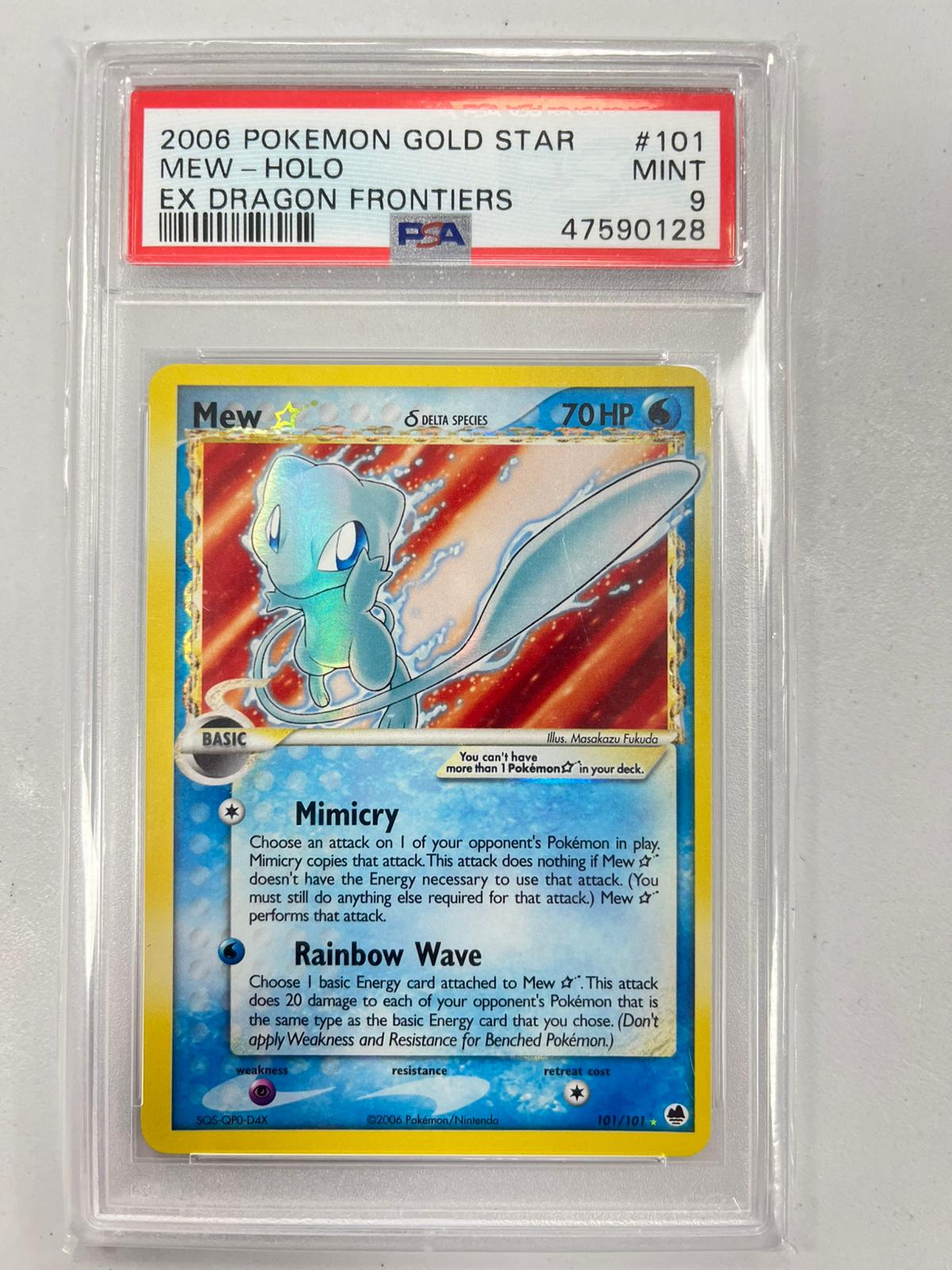
Generally yes, especially if the card earns high grades like PSA 9 or PSA 10, as in the case of the Mew Gold Star EX Dragon Frontiers PSA 9, which shows how much a good grade affects the perception of quality. |
|
Is it worth buying cards that are already graded? |
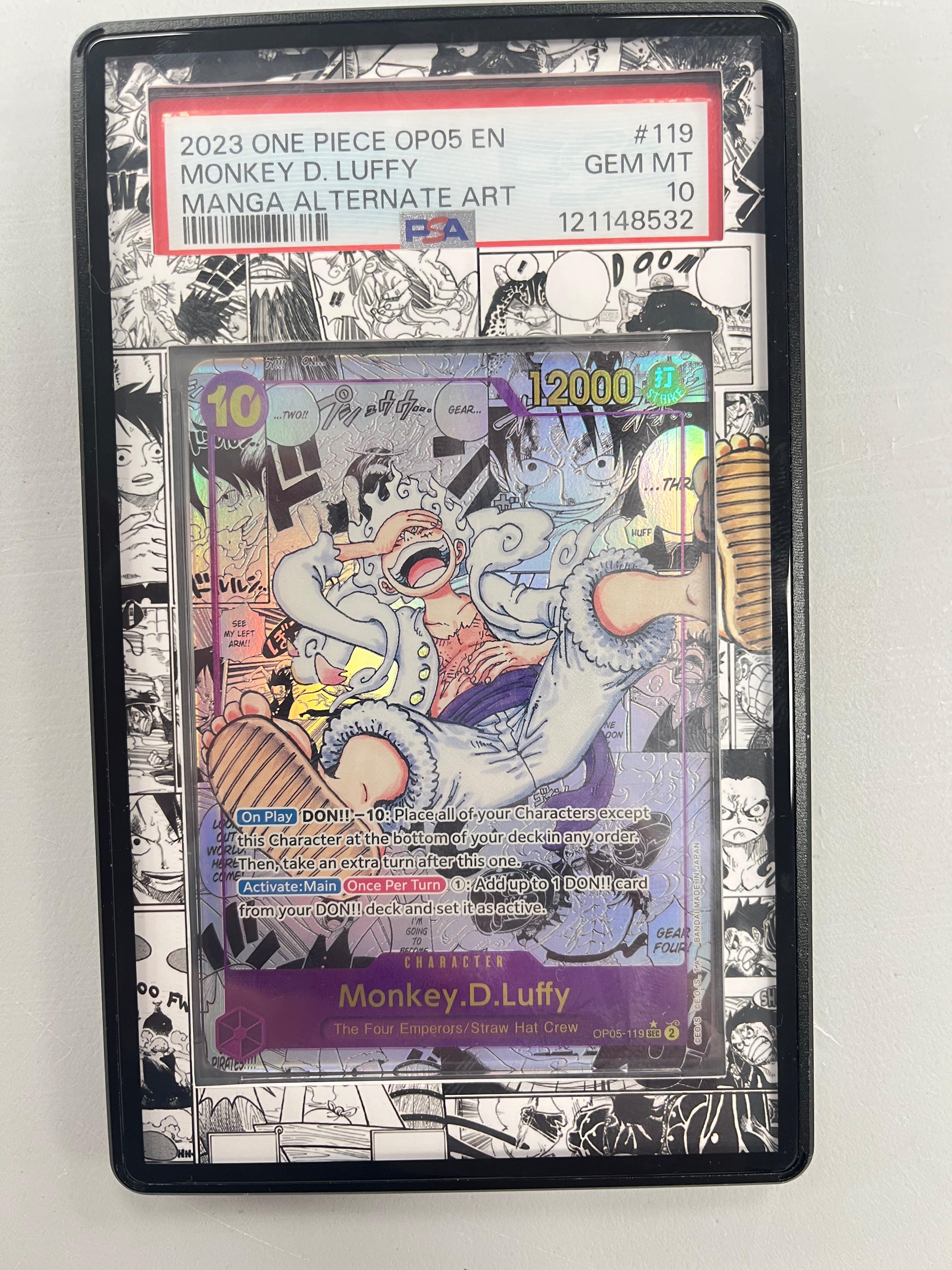
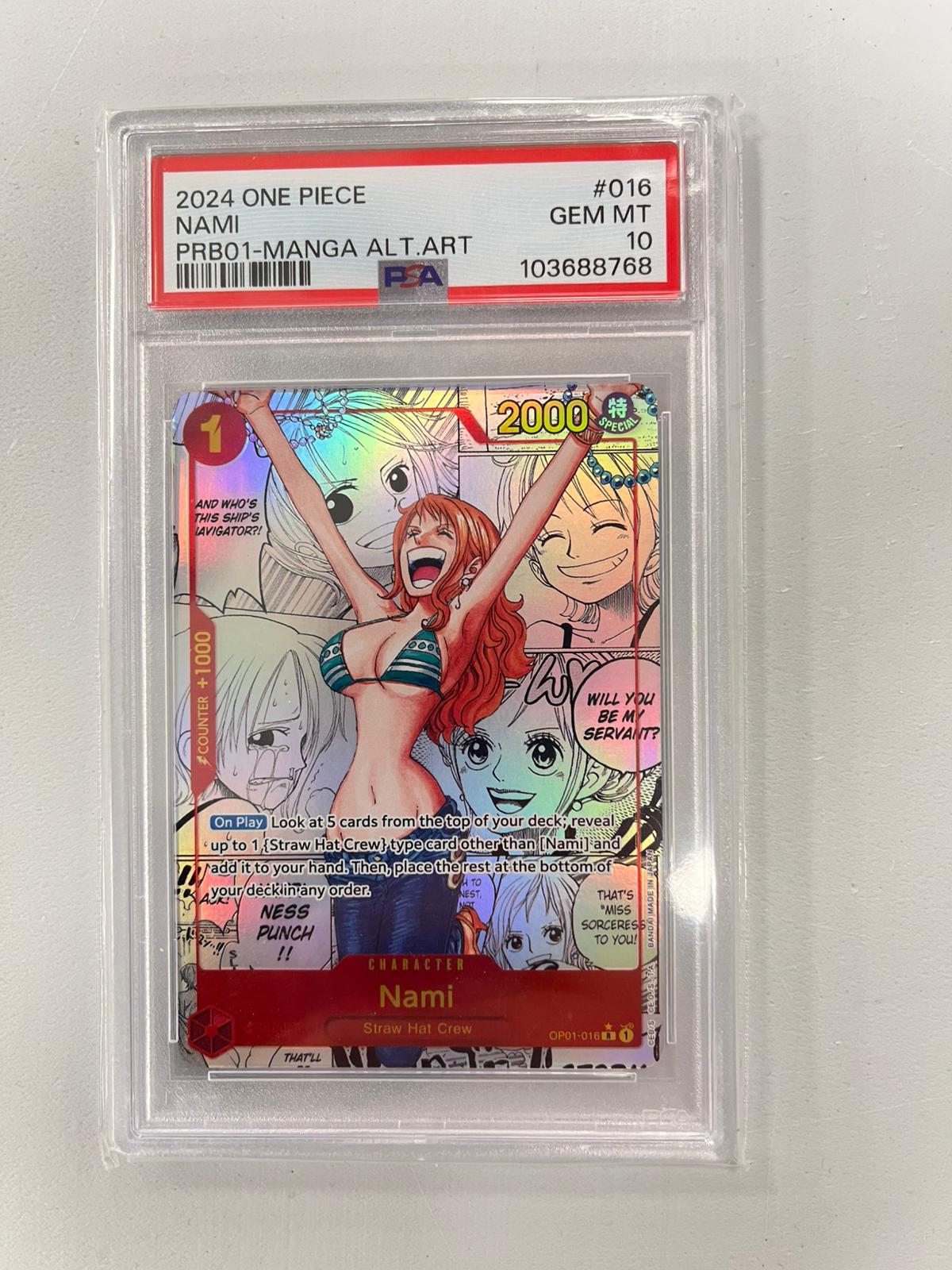
Yes, if you want certainty about authenticity and condition; examples like the Monkey D. Luffy Manga Rare PSA 10 or the Nami Manga Rare PSA 10 show how graded cards are ready for collecting and investment alike. |
1. Why Grading Has Become Essential for Every Collector
In 2024, over 20 million cards were graded across PSA, CGC, SGC and Beckett — a 16% increase over 2023, a sign that the market recognizes grading as the benchmark standard.
For us at GS-Gameon, graded cards aren't just items to display, but a concrete tool for protecting and enhancing the value of your collection over the long term.
Grading and Market Value
The grade assigned by PSA or BGS directly affects the price, especially in the higher tiers such as PSA 9, PSA 10 or BGS 9.5 and black label.
A certified grade reduces the risk for the buyer, increases confidence at the point of sale and makes it easier to compare transactions on the international market.
Graded Cards as a Safe Investment
Buying cards that are already graded lets you avoid hidden surprises, such as microscratches or marks that are hard to spot with the naked eye.
For example, our Monkey D. Luffy Manga Rare OP05-119 ENG PSA 10 is an ideal choice for anyone wanting a One Piece piece that's already certified and ready to collect.
2. Understanding the Grading Scales: PSA, BGS (Beckett) and the Black Label Myth
To grade cards in an informed way, it's essential to know the differences between the main companies, particularly PSA and BGS (Beckett).
Each company uses a slightly different scale and criteria, and this affects both the grade and the market price.
PSA: The Most Liquid Standard on the Market
PSA uses a scale from 1 to 10, where PSA 10 represents a card classed as "Gem Mint" — practically perfect to the naked eye.
According to market data, PSA 10s outvalue cards with 9–10 grades from other companies in roughly 9 sales out of 10, which is why many collectors prefer this label.
BGS Beckett and the Allure of the Black Label
BGS grades cards on a main scale from 1 to 10, with dedicated subgrades for centering, corners, edges and surface, allowing very detailed analysis.
The famous BGS 10 Black Label is the highest possible recognition, achievable only when all the subgrades are 10, and it's considered an absolute premium on the market.

3. Our Grading Service with Beckett: How It Works and When to Use It
With the Grade Your Cards at GS-Gameon with Beckett service, we manage the entire process of sending, receiving and storing your cards for you.
This lets you access Beckett's grading quality without the risks of handling shipping yourself or dealing with complex procedures in English.
The Main Steps of the Service
-
An initial consultation on which cards to grade, with attention to potential value and condition.
-
Preparation, packaging and secure shipping to Beckett through our established channels.
-
Receipt of the graded cards and shipping back to you with protective packaging.
When to Go for Beckett
We recommend BGS in particular for modern cards with very high grading potential, where a 9.5 or a possible black label can make an enormous difference in price.
It's also a popular choice for those who like having a detailed assessment thanks to the subgrades, useful for understanding every aspect of a card's condition.
A 5-step workflow to assess, restore and grade your collectible cards in the best possible way.
Did You Know?
In 2024, more than 20 million cards were graded across PSA, CGC, SGC and Beckett, up 16% from 2023.
4. Card Restoration: When Work Can Save (and Raise) the Value
Not all cards are ready to be sent to PSA or BGS, and in many cases a light restoration can make the difference between a middling grade and a high one.
That's why we created the dedicated Restore Your Cards service, designed to give new life to the most important cards in your collection.
What Professional Restoration Can Do
-
Gentle surface cleaning, respecting the original material.
-
Reduction of small marks, dirt or residue that aren't part of the print.
-
Advice on which cards are worth restoring and which aren't, based on current and potential value.
When Restoration Is Really Worth It
Restoration makes particular sense on vintage or high-value chase cards, where a jump of half a point or a full point in the grade can heavily affect the final price.
On low-value cards, the cost of restoration risks not being justified, which is why we always assess it together with you before going ahead.
5. How to Choose Which Cards to Grade: Practical Criteria to Avoid Wasting Budget
Grading cards has a cost, so the real mastery lies in selecting the right cards, avoiding impulsive submissions that won't bring any real increase in value.
We always recommend applying a few filters before deciding which cards to send to PSA or Beckett.
Four Questions to Ask Yourself Before Grading
-
Does the card have significant current or potential value relative to the cost of grading and shipping?
-
Is the condition at least presumably an 8 or above, to the naked eye and under strong light?
-
Is it a sought-after card, such as a chase card, gold star, manga rare or limited promo?
-
Are there already many graded copies on the market, or is the pop report still relatively low?
Concrete Examples: Pokémon and One Piece
Cards like the Mew Gold Star EX Dragon Frontiers ENG PSA 9 clearly show why a gold star in good condition deserves grading, even if it doesn't earn a 10.
In the same way, One Piece manga rare cards like our Luffy and Nami PSA 10 are great examples of subjects with strong demand that are well worth sending to the grading companies.
6. From the Sleeve to the Slab: Preparing and Shipping Cards Safely
Preparing a card correctly before grading is essential to avoid damage in transit and to present it in the best possible condition.
Many lost grades aren't due to original defects, but to incorrect handling or insufficient packaging.
A Practical Checklist Before Grading Cards
-
Use new penny sleeves and rigid top loaders or card savers recommended by the companies.
-
Avoid touching the surface with your fingers; use gloves or hold the card by the edges.
-
Inspect the main critical areas under strong light and, if possible, with a magnifying glass.
-
Fill out the submission form carefully, especially for PSA and BGS, to avoid registration errors.
Why Rely on a Professional Service
By entrusting the management of grading and restoration to us, you reduce the risk linked to multiple shipments and the completion of complex paperwork.
This is particularly useful if you want to send several cards together and optimize shipping costs and waiting times.
7. Economic Valuation: How to Estimate the Value of Graded Cards
To truly master valuation, you need to connect the slab's grade with real market prices, taking demand, rarity and condition into account.
The same card can show enormous price differences between PSA 8, PSA 9 and PSA 10, and even more so compared to a possible BGS black label.
Key Factors in Valuation
|
Factor |
Impact on value |
|---|---|
|
Grading grade (PSA, BGS) |
The higher the grade, the higher the price, often exponentially so on chase cards. |
|
Pop report |
Few copies at high grade increase the value, while a large population reduces the perceived rarity. |
|
Demand for the character/series |
Iconic characters and popular series like Pokémon and One Piece hold their value better over time. |
|
Sales history |
Serves as a reference for setting a realistic price range before selling or buying. |
Examples of Graded Cards and Their Positioning
A card like the Mew Gold Star PSA 9 sits in a different position than a PSA 10, but it remains far more appealing than a raw copy of dubious condition.
The graded cards we have for sale are selected precisely to offer a balance between grade, rarity and desirability for collectors and investors.
Did You Know?
PSA’s own value proposition emphasizes price realization: PSA 10 cards outsell comparable BGS/CGC/SGC 9–10 grades in the majority of observed sales (roughly 9 in 10 cases).
8. Pokémon, Yu-Gi-Oh! and One Piece: Which Brands Respond Best to Grading
The choice of brand is fundamental when it comes to card grading, because not all lines respond the same way in terms of demand and revaluation.
Recent data show that Pokémon continues to dominate submissions, but TCGs like One Piece are also gaining ever more space in graded collections.
Pokémon: The Giant of Grading
In 2023, Pokémon already accounted for 43% of all cards graded by PSA, and in 2025 TCGs still lead the price dynamics.
Products like 36-pack displays and special collections are ideal sources of potentially gradable cards for anyone chasing iconic hits.
One Piece and the Value of Manga Rares
Cards like the Luffy Manga Rare and the Nami Manga Rare in PSA 10 demonstrate how interest in the One Piece TCG is consolidating in the slab world too.
These cards combine a very strong fanbase with limited print runs — perfect characteristics for grading and subsequent economic appreciation.
9. Buying Cards That Are Already Graded: When It's the Smarter Choice
Grading cards yourself isn't always the best solution; in many cases, buying ready-made slabs is more logical and advantageous.
This is especially true for cards with a high pop report, where the price gap between raw and graded is predictable and well established.
The Advantages of Buying Graded Cards
-
You save time, avoiding months of waiting between sending and receiving the card.
-
You have certainty of authenticity and condition, thanks to the PSA or BGS grade on the label.
-
You can easily compare prices with other copies of the same grade.
Examples from Our Selection
Cards like the Luffy Manga Rare PSA 10, the Nami Manga Rare PSA 10 and the Mew Gold Star EX PSA 9 represent profiles of ready-made slabs to add to a collection or an investment portfolio.
Every graded card in our dedicated category is selected with attention to rarity, desirability and condition, to always ensure high standards for you.
10. Advanced Strategies for Card Grading, Restoration & Valuation Mastery
Once you understand the fundamentals, you can start applying more advanced strategies to combine grading, restoration and valuation into a single structured approach.
This means choosing the right moment to open sealed products, deciding which hits to restore, which to grade and which to instead keep raw or sell straight away.
A Recommended 5-Step Workflow
-
Buying sealed products with a high probability of gradable hits, such as displays and special collections.
-
Selecting the best cards and carrying out a careful visual assessment of each copy.
-
Optional professional restoration of cards with minor flaws but high grading potential.
-
Choosing the most suitable grading company between PSA and Beckett, based on your value and collection goal.
-
Analyzing the market to decide whether to sell straight away, hold for the long term or trade with other collectors.
Integrating White Gloves and Add-On Services
Our White Gloves Services help you manage the full lifecycle of high-value cards, from intake to return.
This way you can focus on the strategic decisions, leaving us all the operational and logistical phases tied to grading, restoration and storage.
Conclusion
Card Grading, Restoration & Valuation Mastery means making informed use of PSA, BGS (Beckett), restoration services and market analysis to maximize your collection's potential.
At GS-Gameon we're by your side at every stage, from the first packs opened to the most prestigious slabs, to help you make informed decisions and build a collection that is solid, secure and well-valued over time.


Leave a comment